

Temple Jewellery Guide: Gold-Look Sets Explained
Temple Jewellery: A Complete Guide to Gold-Look Sets
Temple jewellery is instantly recognisable — bold gold-toned designs featuring deities, motifs like the lotus and peacock, and dense, ornate detailing. Originally crafted as offerings for South Indian temple deities, it’s now one of the most popular styles for weddings, festivals and classical dance across South Asia and the diaspora. This guide covers what temple jewellery actually is, how to choose a set, and how to wear it well.
What Is Temple Jewellery?
Temple jewellery (also called “temple gold” jewellery) originated in South India, where it was crafted for temple idols and used to adorn deities during rituals. Over centuries, the same techniques and motifs were adapted into jewellery worn by devadasis and Bharatanatyam dancers, and eventually into bridal and festive wear across India.
Traditional temple jewellery features:
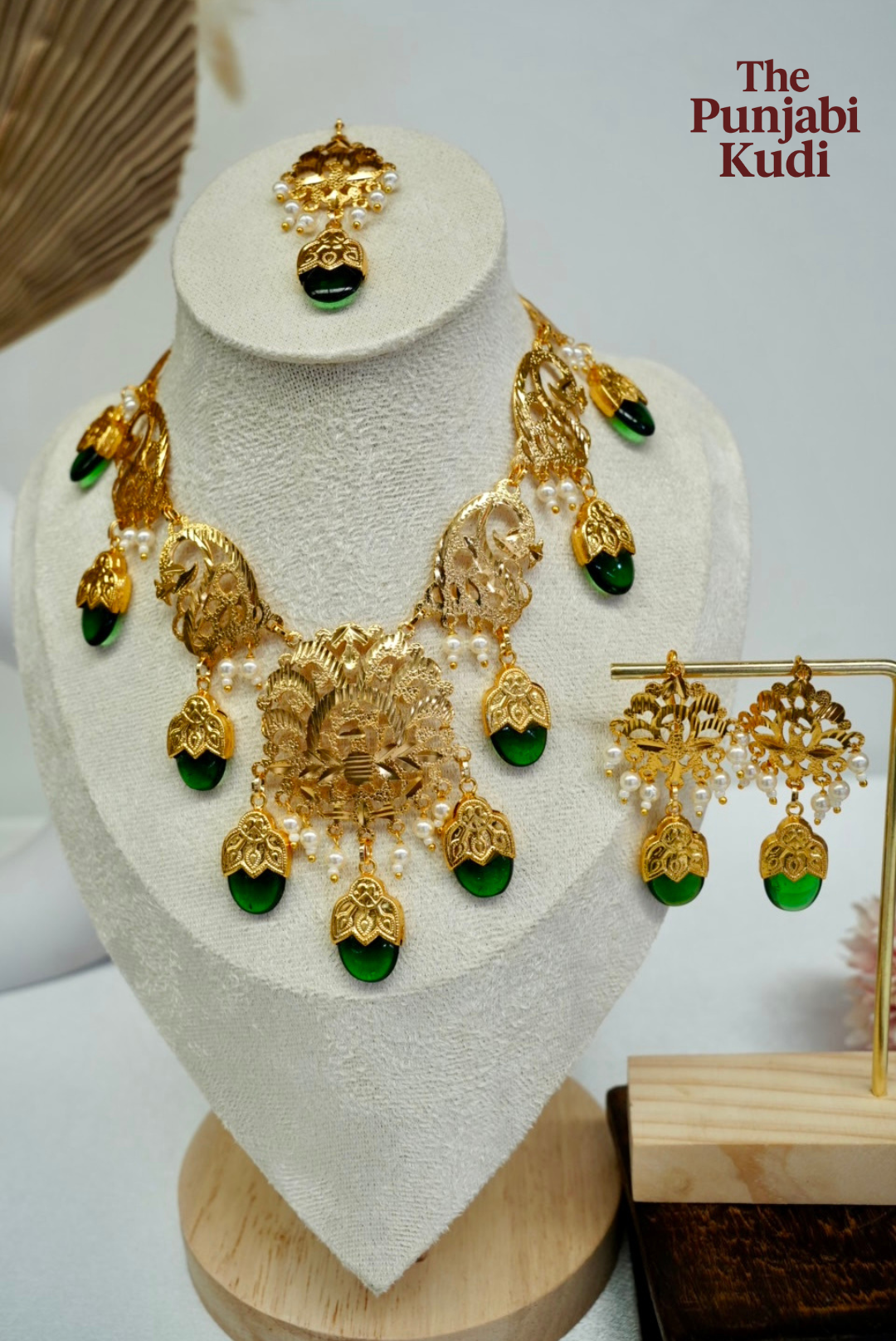
- Deity motifs — most commonly Lakshmi, Krishna, or Nandi, reflecting the style’s religious origins
- Nature-inspired designs — lotus flowers, peacocks, mango (paisley) shapes
- Dense, high-relief detailing, giving pieces a heavier, more three-dimensional look than delicate everyday jewellery
-
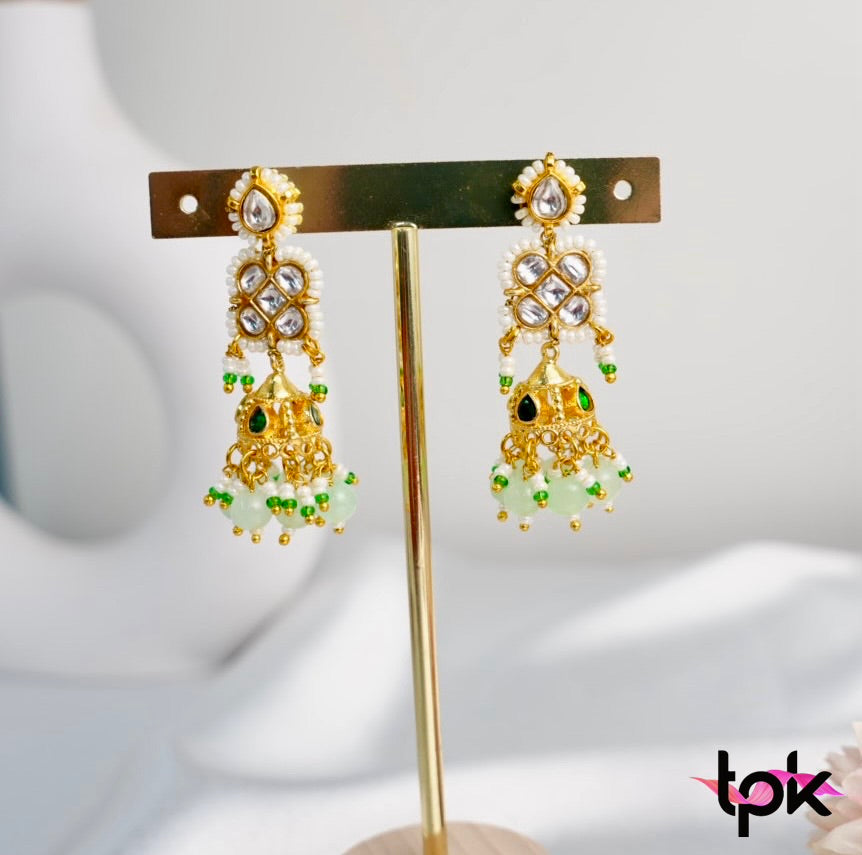
Gold or gold-plated finish, sometimes combined with polki (uncut diamond-style) or kundan stone work
Temple Jewellery Gold: What “Gold” Actually Means
Most temple jewellery sold today, including the vast majority of bridal and festive sets, is gold-plated rather than solid gold — and that’s by design, not a compromise. Gold plating over brass or copper achieves the same rich, high-shine look at a fraction of the weight and cost of solid gold, which matters when a full set (necklace, earrings, tikka, sometimes a choker) can otherwise be genuinely heavy to wear for a full day of wedding functions.
When shopping for “temple jewellery gold” pieces, look for:
- Micro gold plating — a thicker plating layer that holds its shine and colour longer than a light wash finish
- Anti-tarnish coating, which protects the plating from Australian humidity and everyday skin contact
-
Secure stone-setting, since temple pieces often carry more embedded stones or beads than simpler jewellery styles, and loose settings are the most common failure point
Popular Temple Jewellery Styles
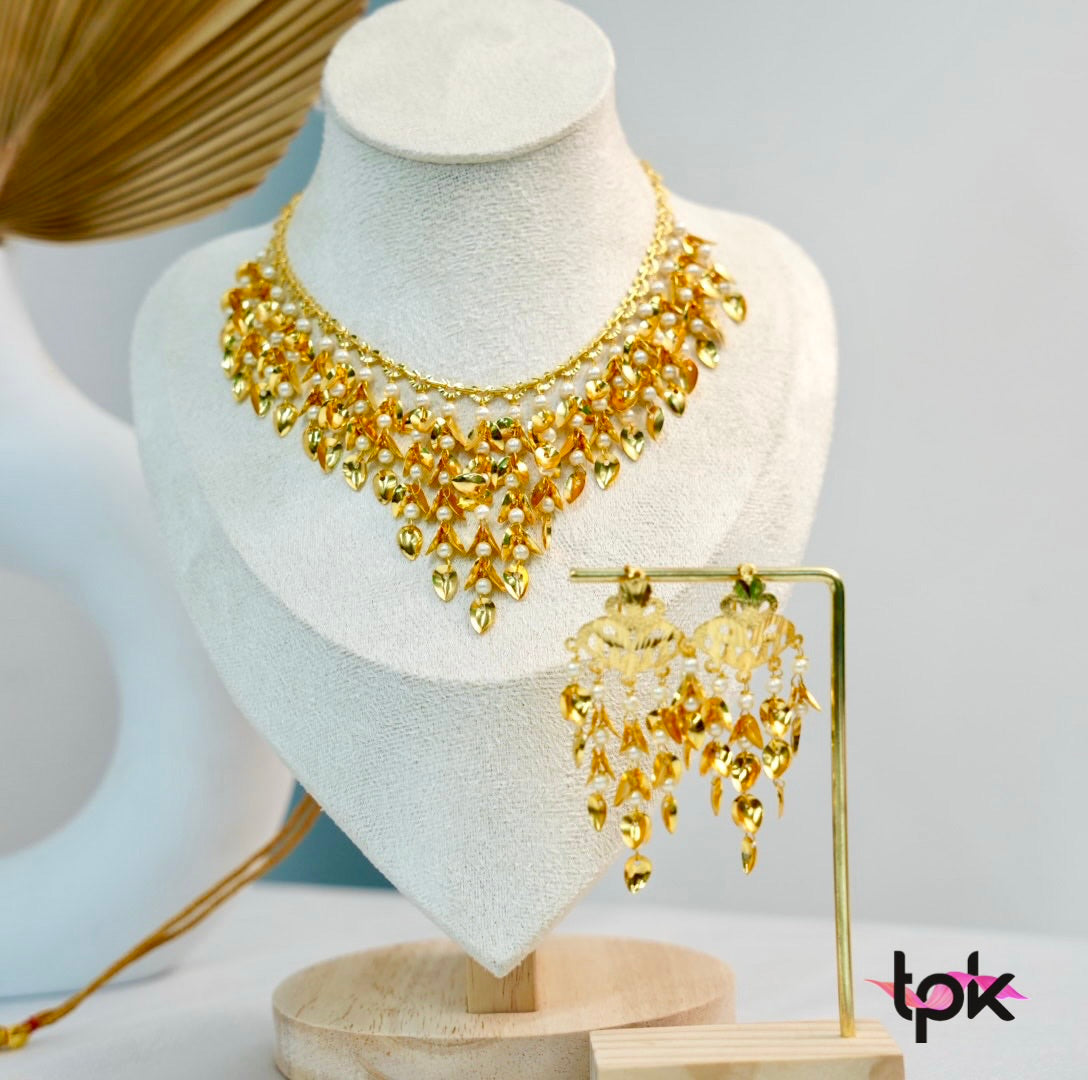
- Temple necklace sets — the centrepiece of most temple jewellery looks, usually paired with matching earrings
- Choker-style temple sets — a shorter, close-fitting design that has become especially popular for reception and sangeet looks
- Temple jhumkas and earrings — can be worn independently of a full set for a subtler festive look
-
Dakh sets — layered necklace styles that combine well with temple-style pendants for a fuller bridal look
How to Choose a Temple Jewellery Set
- Match the neckline of your outfit. A high, dense choker-style set suits a plain or lightly embroidered neckline, while a heavily embroidered blouse or suit often looks better with a longer, simpler temple necklace so the two don’t compete.
- Consider the occasion. A full, ornate set with tikka and earrings suits weddings and receptions; a single temple necklace or earrings alone works better for everyday festive wear or smaller functions.
- Check the weight. Dense temple designs can be heavier than delicate gold-plated jewellery — if you’re wearing it for a full-day event, prioritise pieces with a lighter alloy base if comfort matters as much as look.
- Buy the set together where possible. Temple jewellery motifs and finishes vary between makers, so a necklace and earrings bought as a matched set will read as more cohesive than pieces mixed from different sources.
Styling Temple Jewellery
Temple jewellery pairs naturally with rich, jewel-toned or traditional silk-look outfits — think maroon, deep green, mustard and royal blue — where the gold tone stands out rather than getting lost. It also works well layered with a maang tikka and jhumka earrings for a complete bridal look, or with a phulkari dupatta for a Punjabi wedding function that blends South and North Indian traditions. For a more understated day look, a single temple pendant or a pair of temple jhumkas is often enough on its own.
Caring for Temple Jewellery
- Store pieces separately in soft pouches to avoid the plating scratching against other jewellery
- Remove before applying perfume, hairspray or moisturiser — these accelerate tarnishing on gold-plated finishes
- Wipe with a soft, dry cloth after each wear rather than washing with water
- Avoid prolonged sun exposure, which can dull plated gold tone over time
Shop Temple Jewellery at The Punjabi Kudi
You’ll find gold-plated temple-style pieces across our Necklace Set, Choker Set, Dakh Set and Earring Tikka Set collections, plus our full Jewellery range and Premium Gold Plated line for a heavier, more durable finish. If you’re planning a full bridal look, our Punjabi Bridal Fashion Guide shows how to layer temple-style pieces with phulkari and paranda.
Frequently Asked Questions
Is temple jewellery real gold?
? Most temple jewellery sold for bridal and festive wear is gold-plated over brass or copper, not solid gold. This keeps pieces lighter and more affordable while still achieving the traditional rich gold look.
What occasions is temple jewellery appropriate for?
Weddings, engagements, festivals, classical dance performances, and religious ceremonies are the most common occasions. Simpler pieces, like a single pendant or jhumkas, also work for everyday festive wear.
How do I stop gold-plated temple jewellery from tarnishing?
Store pieces separately in a dry, soft pouch, avoid contact with perfume and moisturiser, and wipe with a dry cloth after wearing rather than washing with water.
Can temple jewellery be worn with non-South Indian outfits?
Yes. While it originated in South India, temple jewellery is now widely worn across regions and paired with Punjabi suits, lehengas, sarees and even Indo-western outfits.
What’s the difference between temple jewellery and kundan jewellery?
Temple jewellery is defined by its gold-toned, deity- and nature-inspired motifs, while kundan refers to a specific stone-setting technique using foiled glass or gems. The two styles are sometimes combined, but they’re not the same thing.
