

A Beginner's Guide to Punjabi Jewellery Terms
Punjabi jewellery has its own rich vocabulary, rooted in centuries of regional tradition, and if you're new to it, the names can be genuinely confusing. This glossary explains the most common terms in plain English: what each piece is, where it's traditionally worn on the body, and when it's typically worn. Use it to shop with confidence and understand exactly what you're buying.
Paranda
A decorative hair tassel, traditionally made from silk or wool thread, braided into the hair and worn hanging past the end of the plait. Parandas are strongly associated with Punjabi wedding and festival dress, and the length and detailing typically scale with the formality of the occasion. See our full paranda vs parandi guide for the difference between the two closely related terms.

Phulkari
Literally meaning "flower work" (phul = flower, kari = work), phulkari is a traditional Punjabi embroidery technique using vibrant floral and geometric patterns stitched by hand onto cotton or silk fabric, most often seen on dupattas, shawls, and suits. Historically, phulkari was made by women within the family as part of a bride's trousseau, and the craft carries deep cultural significance beyond its decorative use.

Jhumka
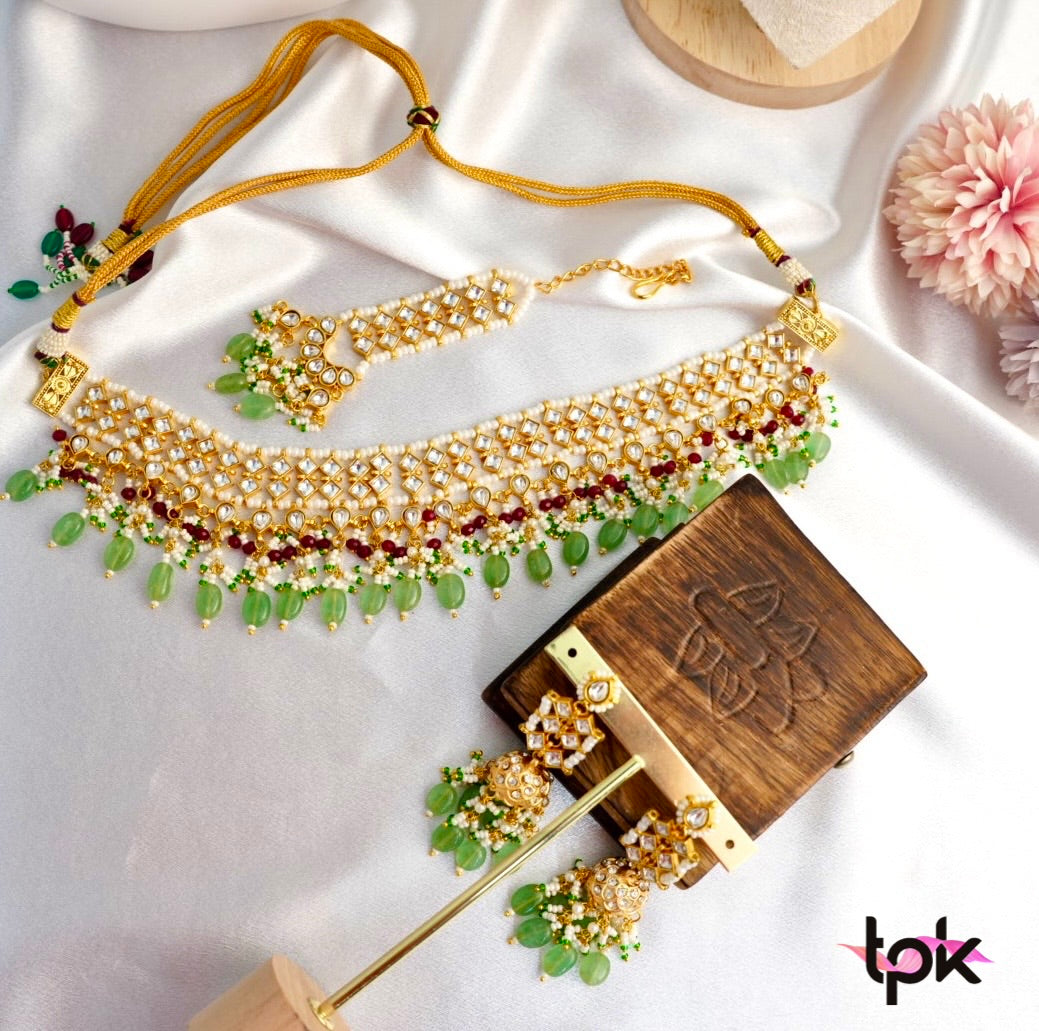
Bell-shaped dangling earrings, a style of jewellery worn widely across Indian and Punjabi culture. The name comes from their traditional bell-like shape, which was historically believed to make a soft sound as the wearer moved. Jhumkas range from small, delicate everyday designs to large, heavily embellished bridal pieces, and they pair well with both traditional and fusion outfits.

Maang tikka
A piece of jewellery worn on the forehead, consisting of a decorative pendant that sits at the centre hairline, connected by a fine chain that parts through the hair. Traditionally worn by brides as part of the full bridal jewellery set, the maang tikka has become a popular accessory for festivals, engagements, and formal events more broadly, styled in everything from simple, delicate designs to elaborate stone-studded pieces.
Kaintha
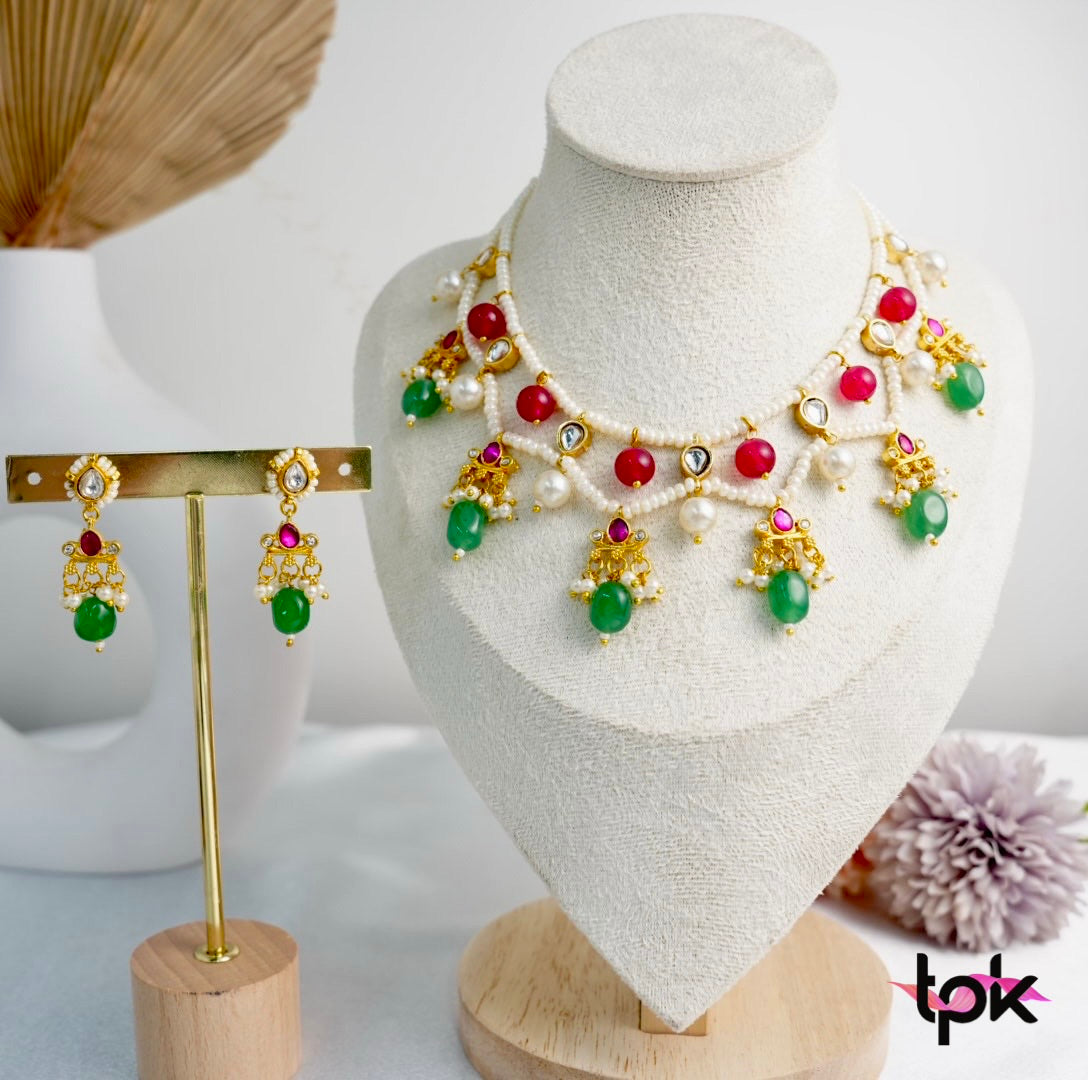
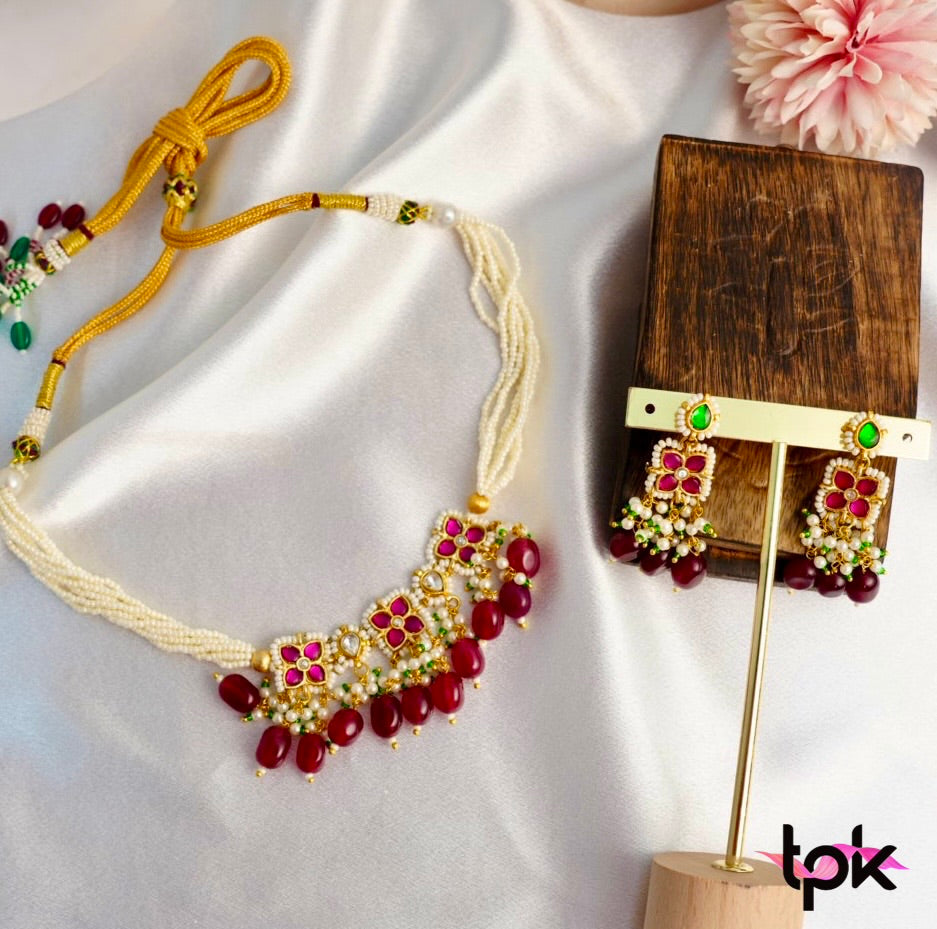
A style of necklace, often layered, textured, or featuring beadwork, traditionally worn as part of a bridal or festive jewellery set. Kaintha necklaces are often paired with matching earrings as a coordinated set, and the term is sometimes used specifically for necklaces with a distinctive layered or multi-strand construction.

Passa
A hair ornament worn on the side of the head, typically extending from the hairline toward the temple, often paired with a maang tikka for a complete bridal or festive hair look. The passa adds decorative detail along the sides of the parting and is a signature feature of traditional Punjabi bridal styling.
Saggi phull
A traditional Punjabi head ornament worn along the parting of the hair, typically as part of a complete bridal jewellery set. The saggi phull sits along the crown of the head and is one of the more distinctive, traditionally Punjabi (as opposed to broader North Indian) jewellery pieces, often passed down or gifted as part of wedding preparations.
Dakh set
A jewellery set style referring to a matched combination of necklace and earrings, designed and sold together to be worn as a coordinated look. Dakh sets are a popular way to buy a complete jewellery look in one purchase rather than piecing together individual items.
Choker set
A close-fitting necklace worn high on the neck rather than hanging at chest level, usually paired with matching earrings. Choker sets are popular for both bridal wear and festive occasions like Sangeet, since the shorter length works well with a wider range of necklines and hairstyles.

Kaleere
Decorative hanging ornaments, traditionally umbrella- or bell-shaped, worn on the bride's bangles during a Punjabi wedding ceremony. Kaleere are traditionally gifted to the bride by her close family, particularly her maternal uncles and aunts, and carry symbolic significance around blessings for the bride's future.
Chooda
A set of bangles, traditionally red and white or red and cream, worn by Punjabi brides for a set period after the wedding. Historically this period ran up to a year, though modern practice varies widely. The chooda is a recognisable symbol of a newly married Punjabi woman.
Bindi
A decorative mark or dot worn on the forehead, between the eyebrows. Traditionally a simple red dot with religious and cultural significance, the bindi has evolved into a broader fashion accessory available in countless colours, shapes, and embellishments. Styles range from simple traditional dots to elaborate crystal and stone designs worn for festive occasions.
Why do these terms matter when shopping?
Understanding these terms helps in two practical ways. First, it means you can search and shop more precisely. Rather than searching generically for "Indian jewellery," you can find exactly the piece you need for a specific part of a bridal or festive look. Second, it helps set expectations around how a piece is meant to be worn and styled, since many of these items (like the passa and saggi phull) are specifically designed to be worn together as part of a complete traditional look rather than as standalone pieces.
Frequently asked questions
Do I need to buy a full matching set, or can I mix pieces?
Mixing and matching is common practice. Many customers build a look over time by combining pieces from different sets. Matching sets like dakh sets and choker sets simply offer a convenient way to buy a coordinated look in one purchase.
Which of these pieces are considered essential for a Punjabi bride?
A traditional full bridal look typically includes a maang tikka, passa, saggi phull, kaintha or choker set, jhumka earrings, chooda, and kaleere, though the exact combination varies by family tradition and personal preference.
Are these terms used the same way across all of India, or just Punjab?
Some terms (like jhumka and bindi) are used broadly across Indian culture, while others (like saggi phull and chooda) are distinctly Punjabi and may not be familiar outside that specific regional tradition.
Shop by category
● Paranda
● Phulkari
● Bangles
● Bindi
