

How to Stack Necklaces the Right Way
Necklace stacking works best when each piece sits at a different length, roughly two to three centimeters apart, so the chains do not overlap or tangle throughout the day. A typical stack starts with a short choker or collar, adds a mid-length pendant piece, and finishes with a longer chain, creating visual layers rather than one crowded cluster at the same height.
This guide covers the length rules that prevent tangling, how to mix metals and textures without it looking accidental, and the styling choices that work for both everyday wear and special occasions.
The Length Rule That Makes Stacking Work
Spacing is the single biggest factor separating a polished stack from a tangled mess. Necklaces of the same length sit at the same point on the chest, which causes constant overlapping and knotting as you move throughout the day.
A workable stack usually follows a pattern like this: a choker or collar at 35 to 40 centimeters, a pendant necklace at 45 to 50 centimeters, and a longer chain at 55 to 60 centimeters or beyond. Each piece has its own space to sit, which keeps the overall look intentional rather than cluttered.
If two necklaces must be close in length, choose pieces with different chain styles. A delicate chain layered against a chunkier link chain avoids tangling even at similar lengths, since the difference in weight and link size keeps them from sliding into each other.

Building a Stack From the Ground Up
Start with your shortest piece, since this sets the visual anchor closest to the neckline. A choker, a kaintha, or a collar-style necklace works well here, sitting high and drawing the eye upward.
Add a mid-length piece next, ideally with a small pendant or charm, since this layer becomes the focal point of the stack. This is usually where a statement piece, such as a traditional pendant or a gemstone drop, works best.
Finish with your longest chain, letting it sit lower on the chest. This piece should generally be the simplest in the stack, a plain chain rather than another pendant, so the overall look does not become visually crowded at the bottom.
Mixing Metals Without It Looking Accidental
Mixing gold and silver in one stack has moved firmly into mainstream styling, but it works best with intention rather than by accident. Choose one metal as the dominant tone, worn in two of the three pieces, and use the second metal for a single accent piece. This creates contrast without either metal fighting for attention.
Repeating a small detail across mixed-metal pieces, such as matching bead work or similar clasp styles, helps tie the stack together visually even when the metals differ.
Mixing Textures and Styles
A stack made entirely of plain chains, while safe, often reads as flat. Combining a smooth chain with a textured piece, such as a phulkari-inspired pendant or a beaded strand, adds depth without requiring bold colors or oversized pieces.
Traditional and modern pieces pair well together when lengths are staggered correctly. A classic mala-style necklace layered with a simple modern chain creates contrast between heritage and everyday wear, which suits both festival outfits and daily styling.
Stacking for Necklines
A crew neck or high collar suits shorter stacks, since longer chains tend to disappear under the fabric. Two pieces at 35 and 45 centimeters usually work best here.
A V-neck or scoop neck has more room to work with, allowing a three-piece stack that follows the line of the neckline down toward the chest.
For traditional outfits with an open neckline, such as a suit or lehenga, a fuller stack of three to four pieces, mixing a choker, a mid-length pendant, and a longer chain, complements the outfit without overwhelming it, particularly when one piece is a statement kaintha or mala.
Common Stacking Mistakes
Choosing pieces that are too close in length is the most frequent mistake, and it is the direct cause of tangling throughout the day.
Stacking too many statement pieces at once competes for attention. A stack works best with one clear focal point, usually the mid-length piece, while the others stay simpler.
Ignoring clasp placement causes chains to twist as you move. Fastening each necklace so the clasp sits at the back of the neck, rather than to the side, keeps the whole stack sitting evenly.
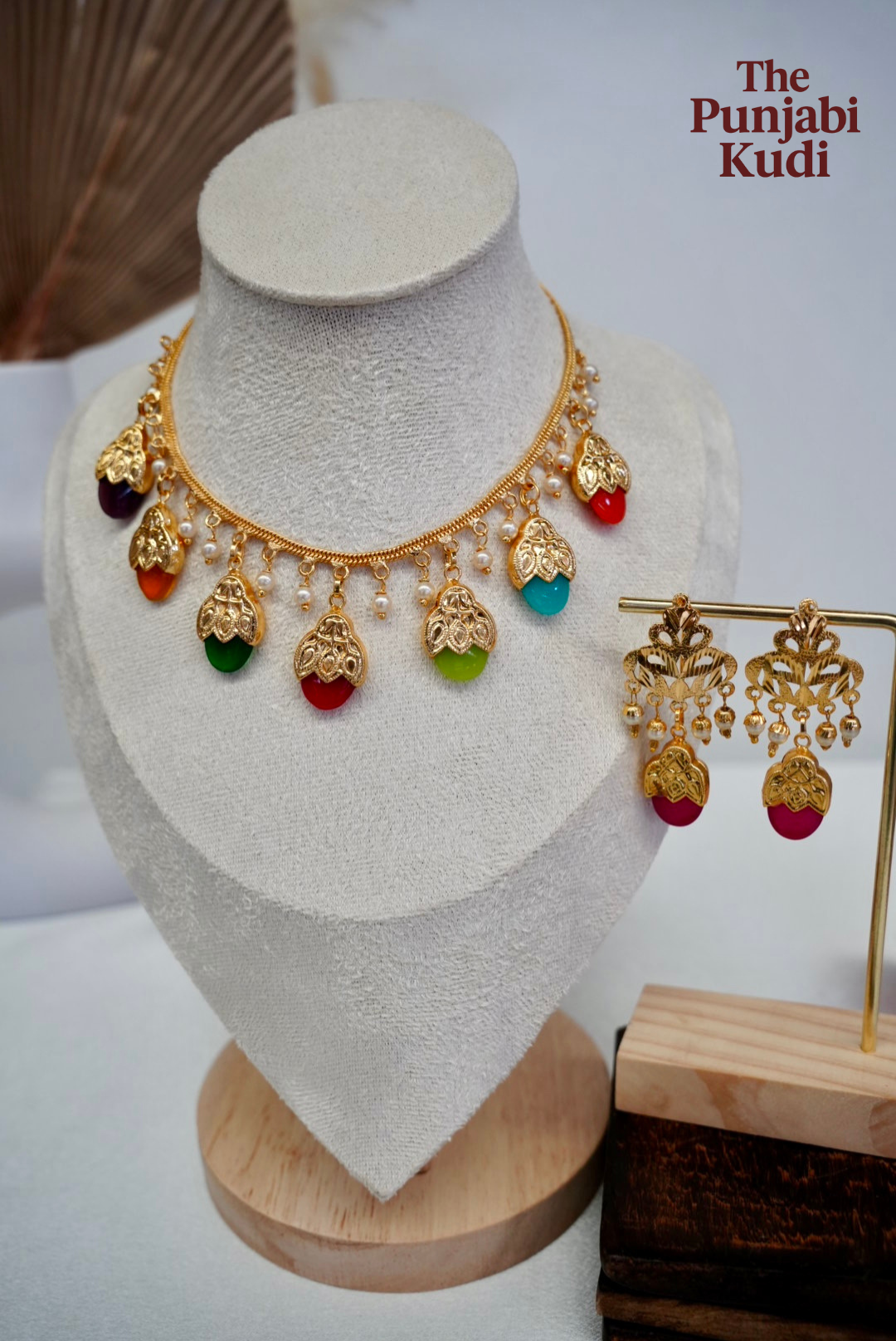
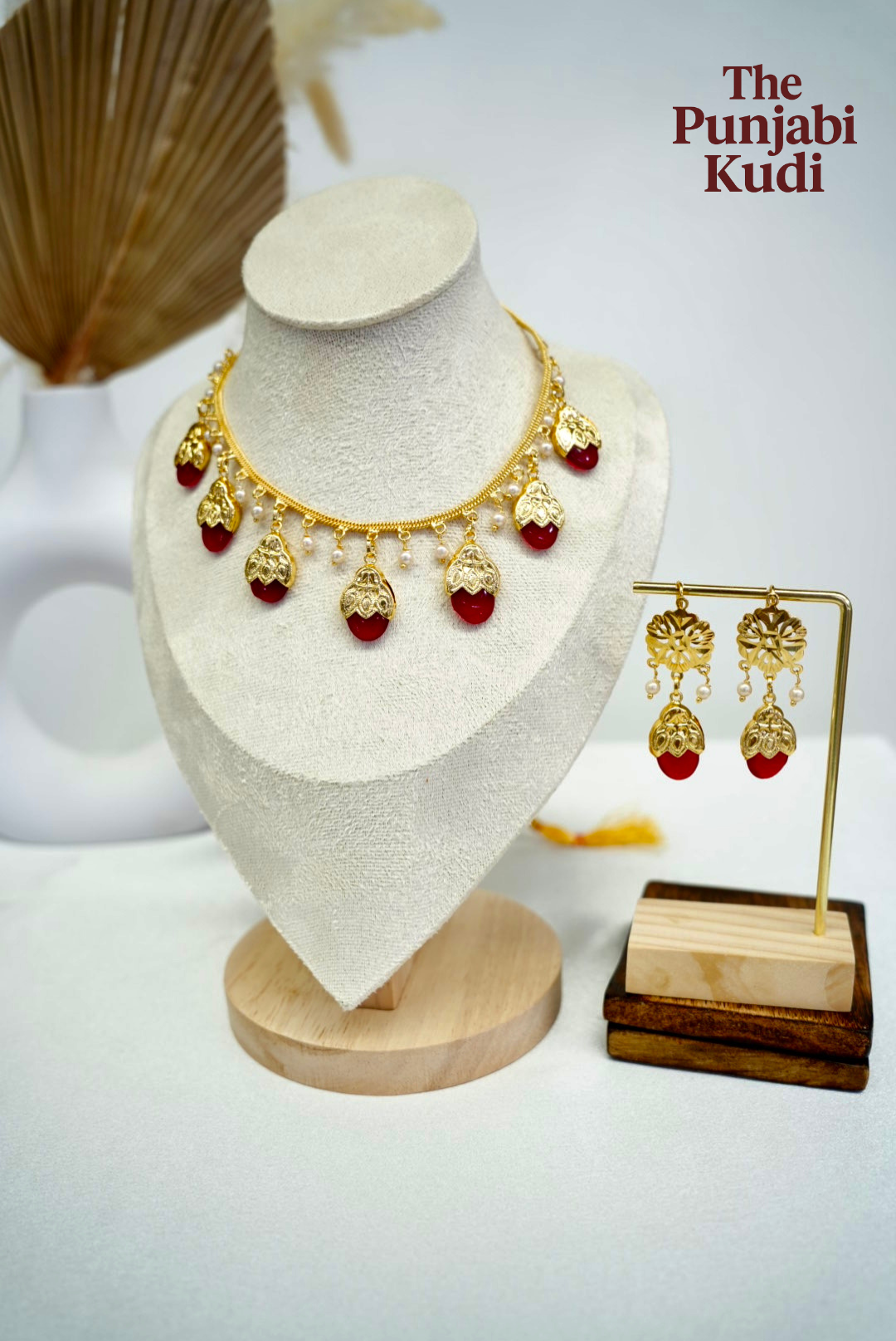
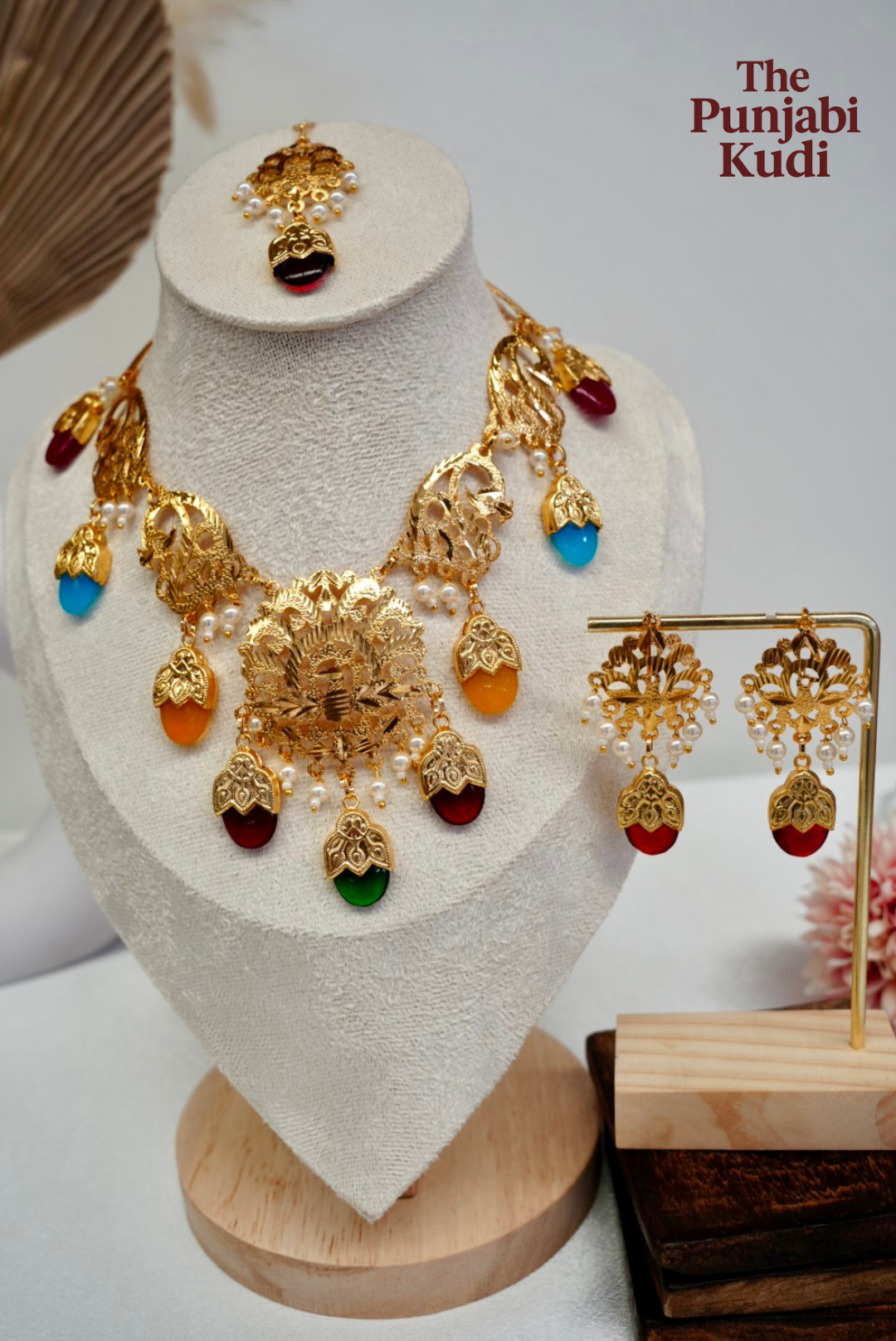
We stock beautiful traditional Punjabi Dakh Sets in vibrant multicolor and red stone designs, including elegant sets with matching tikka, making it easy to complete your festive or wedding look with authentic Punjabi jewellery.
Preventing Tangles in a Stack Throughout the Day
Beyond correct length spacing, a light layer of hairspray or a small dab of hand lotion at the back of the neck, allowed to dry before putting the necklaces on, reduces friction between chains slightly and cuts down on tangling during movement.
At the end of the day, remove necklaces one at a time, longest first, rather than lifting the whole stack off together. This prevents the shorter pieces from catching on the longer ones during removal.
Frequently Asked Questions
How many necklaces can I stack at once?
Three pieces is the most versatile number for everyday stacking. Four or more works for special occasions but requires more careful length spacing to avoid a cluttered look.
Can I stack necklaces of the same metal only?
Yes. A single-metal stack, particularly in gold, is a classic and low-maintenance option that avoids the styling decisions mixed metals require.
Do stacked necklaces tangle more than single pieces?
They tangle more if lengths are too similar or chains are stored together while worn. Correct spacing and different chain styles largely solve this.
Should the shortest or longest necklace go on first?
Put the shortest piece on first, since it sits closest to the neck and is easiest to clasp before adding longer pieces on top.
Final Thoughts
A well-built necklace stack comes down to spacing, contrast, and one clear focal point, not the number of pieces you own. Start with a short anchor piece, build a mid-length focal point, and finish with a longer simple chain, and the stack will hold its shape and style all day. Shop The Punjabi Kudi's necklace sets to build a stack that mixes tradition with everyday wear.
