

How to Get a Knot Out of a Necklace (Without Breaking It)
The fastest way to remove a knot from a necklace is to lay the chain flat, apply a small amount of baby oil or cornstarch to the tangled section, and use two fine needles to loosen the knot from the outside in. This softens friction between the links and lets you work the knot apart instead of pulling it tighter.
This guide walks through the tools that actually work, a step-by-step method for both fine chains and thicker links, and the mistakes that turn a small tangle into a snapped chain.
Why Necklace Chains Knot So Easily
Thin chains, especially box chains and snake chains, knot easily because their links are small and flexible enough to slide through one another. Movement inside a jewellery box, a drawer, or a travel bag causes the chain to loop back on itself repeatedly until the loops tighten under their own weight. The thinner and lighter the chain, the faster this happens.
Thicker curb chains and rope chains resist knotting because their links are more rigid, but once they do knot, the loops are harder to separate by hand.

What You Need
● Two fine sewing needles or straight pins
● Baby oil, olive oil, or cornstarch
● A flat, well-lit surface
● A magnifying glass (optional, for very fine chains)
● Tweezers for the final loosening
Avoid using your fingernails alone. Pulling at a knot with your fingers tends to tighten it further, since the friction between links increases as they compress.
Step-by-Step: Removing the Knot
Start by laying the necklace flat on a table under strong light. Spread the chain out so the knotted section sits in the open, away from any other loops.
Apply a single drop of baby oil directly onto the knot, or dust a small pinch of cornstarch over it if you prefer to avoid oil near gemstones. Both reduce friction between the metal links, which is the main reason knots resist separation.
Insert one needle into the loosest part of the knot and hold it steady. Use the second needle to gently widen the loop next to it. Work slowly, loop by loop, rather than trying to pull the whole knot open in one motion. Each small loosening makes the next one easier.
Once the knot loosens enough to see daylight through the loops, switch to tweezers to guide the chain through the remaining tangle. Straighten the chain fully, then wipe it down with a soft cloth to remove any leftover oil or cornstarch.
What to Do With a Stubborn Knot
If the knot has been sitting for weeks or has tightened through repeated handling, give it more time rather than more force. Reapply oil and let the chain sit for ten minutes before continuing. The oil needs a moment to work into the metal-on-metal contact points.
For chains under one millimeter thick, a magnifying glass makes a real difference. Fine chains hide small loops that are nearly invisible to the naked eye, and forcing a needle into the wrong loop can pull the knot tighter instead of looser.
If a knot will not budge after two attempts, stop. Continued pulling risks stretching or snapping the links permanently. A jeweller can remove a stubborn knot in minutes using tools built for the job, and the cost is usually lower than replacing the chain.
Mistakes That Make Knots Worse
Pulling both ends of the necklace apart is the most common mistake, and it is almost always the reason a small knot turns into a permanent tangle. Tension pulls the loops tighter rather than apart.
Using a fork or comb to "brush out" the knot, a method that circulates online, works only on the loosest tangles and tends to snag fine chains, bending links out of shape.
Skipping the oil or cornstarch step makes every other step harder. Dry metal links grip each other under friction, and even a well-loosened loop can re-tighten without lubrication.
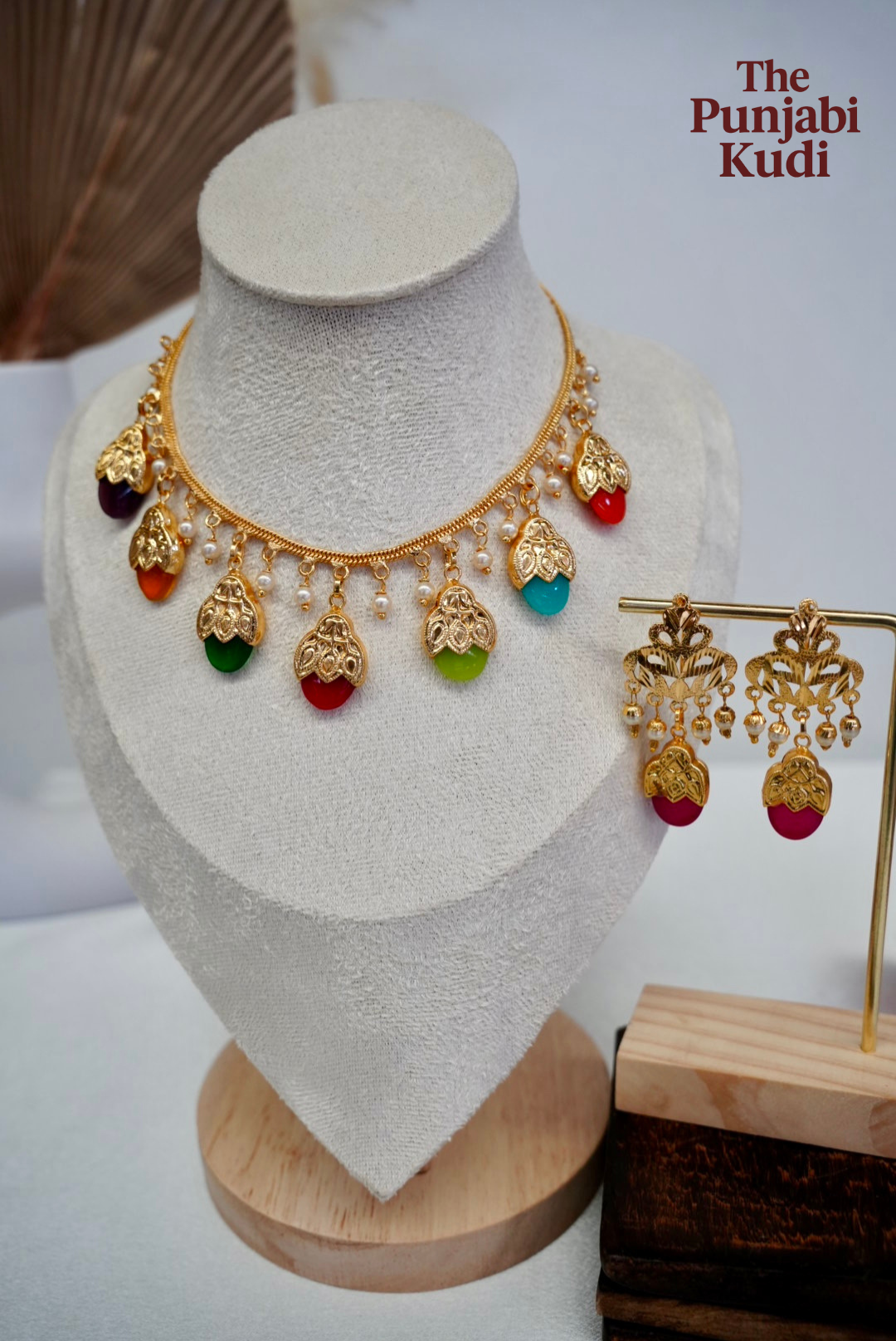
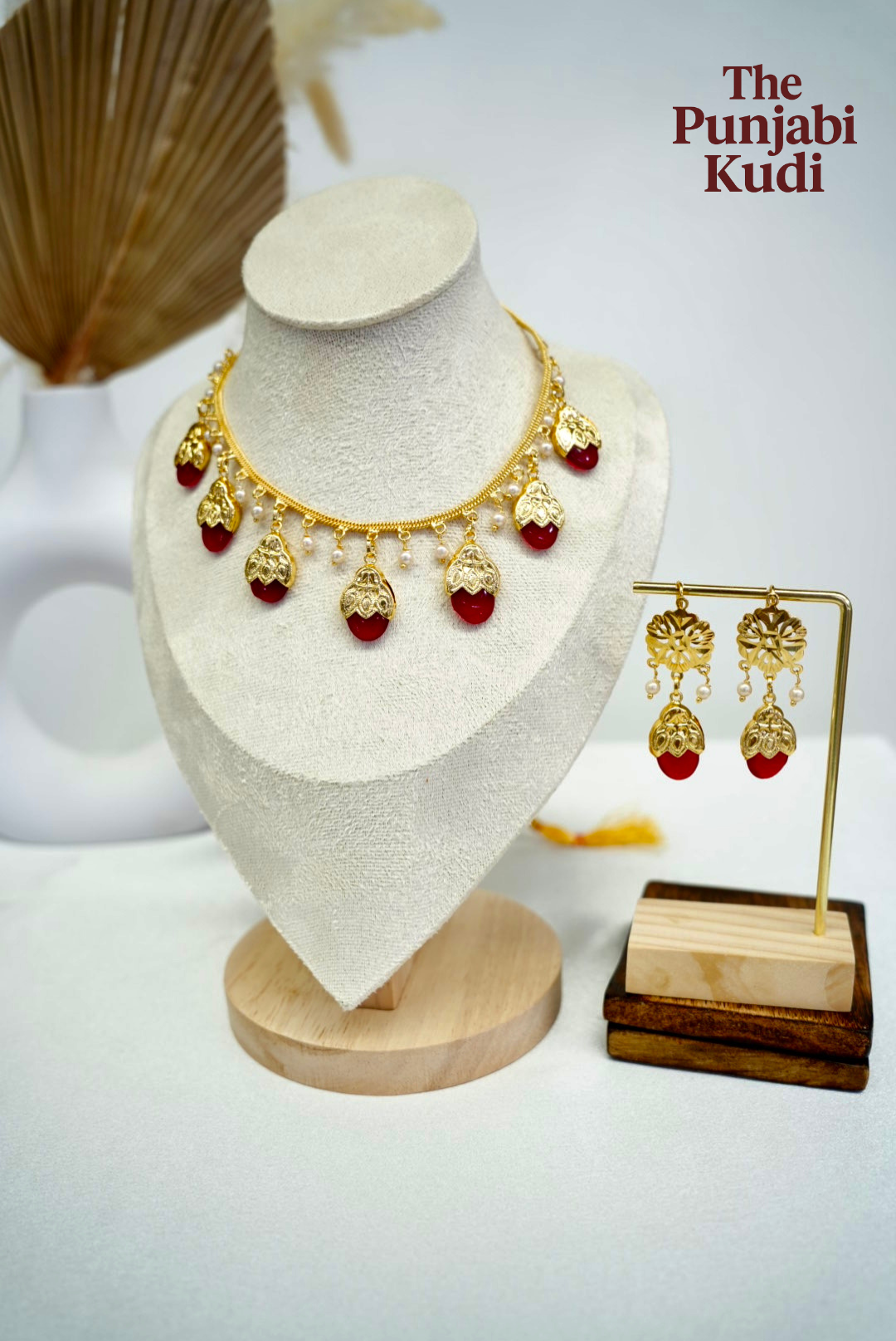
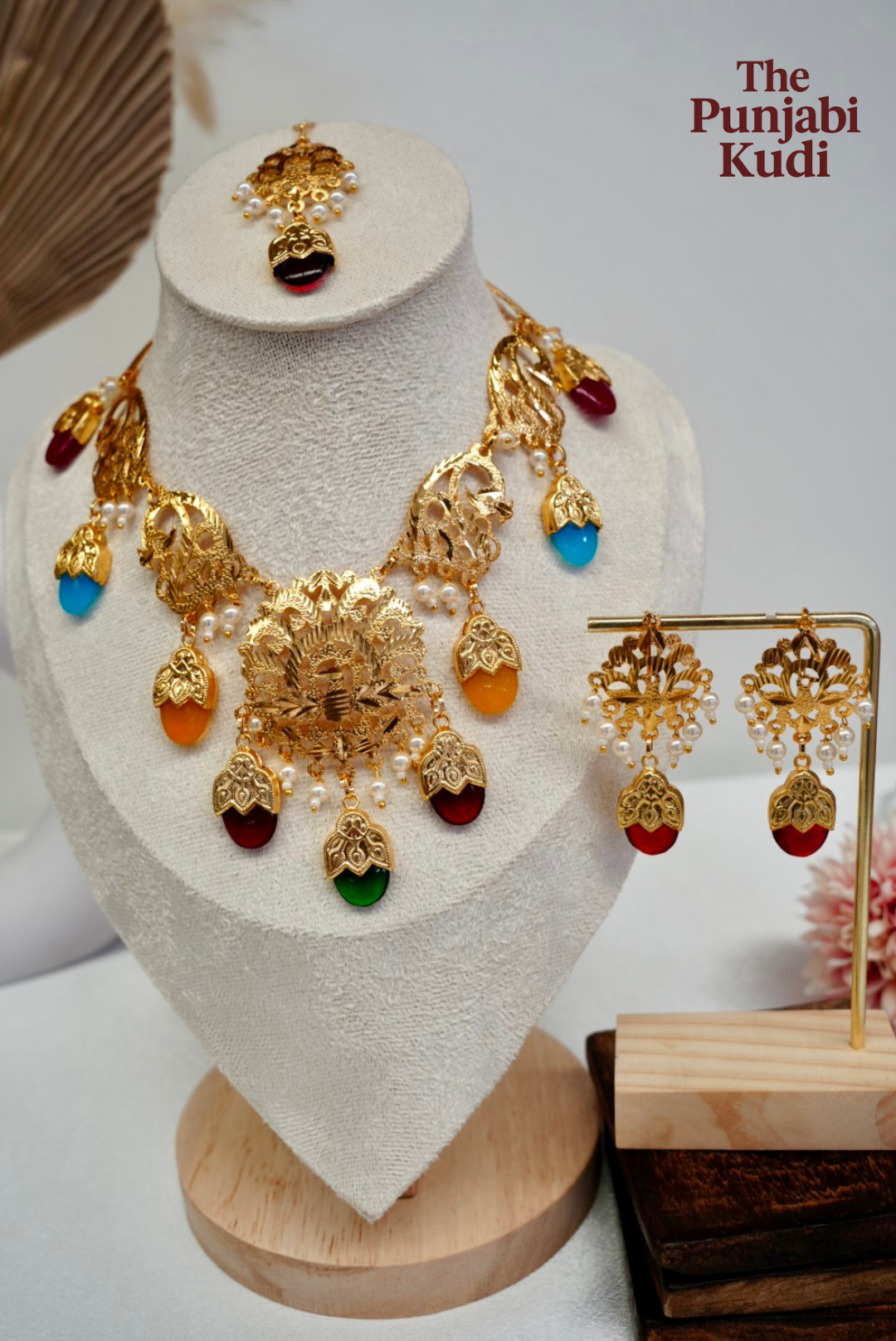
We stock beautiful traditional Punjabi Dakh Sets in vibrant multicolor and red stone designs, including elegant sets with matching tikka, making it easy to complete your festive or wedding look with authentic Punjabi jewellery.
How to Prevent Knots in the First Place
Store necklaces separately rather than piled together in a drawer or box. A tangle-free storage method, such as hanging hooks, individual pouches, or a jewellery roll with separate slots, keeps chains from touching each other during movement.
For travel, thread the necklace through a straw before closing the clasp, or wrap it flat around a piece of cardboard and secure the ends. Both methods stop the chain from moving freely enough to loop back on itself.
Clasping the necklace closed before storing it, even when not being worn, also reduces knotting. An open clasp gives the chain more freedom to shift and tangle.
Frequently Asked Questions
Can baby oil damage gold or silver necklaces?
No, a small amount of baby oil is safe on gold, sterling silver, and most plated jewellery. Wipe the chain clean afterward with a soft cloth to remove any residue.
Is it safe to use a needle on a delicate chain?
Yes, as long as you work slowly and avoid forcing the needle through tight loops. Fine chains are more prone to bending, so light pressure matters more than speed.
Why does my necklace knot every time I wear it?
Thin, flexible chains like box or snake chains knot more easily during movement. Wearing a slightly heavier chain style, or securing the clasp at the back of your neck properly, reduces the chance of tangling during the day.
Should I take a knotted necklace to a jeweller?
If the knot does not loosen after a few minutes of gentle work with oil and needles, a jeweller can usually remove it quickly and safely, especially on fine or antique chains.
Final Thoughts
A knotted necklace looks worse than it usually is. With a drop of oil, two needles, and a little patience, most tangles come apart in under ten minutes without any damage to the chain. Store your pieces separately going forward and knots become a rare inconvenience rather than a regular one. Explore The Punjabi Kudi's necklace sets for pieces designed with sturdier link work that resists tangling.
